
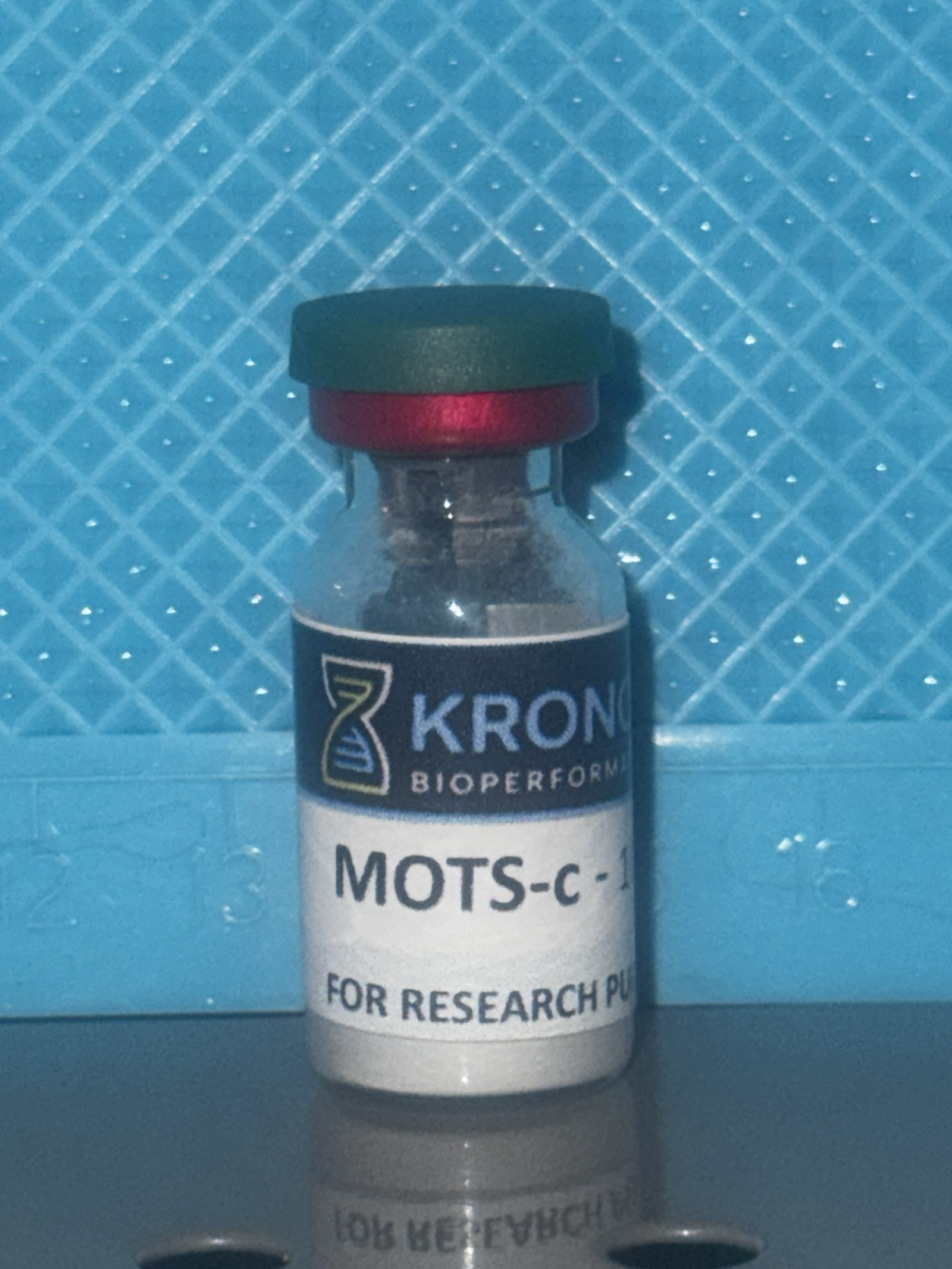
Description
What Is MOTS-c?
MOTS-c (Mitochondrial Open Reading Frame of the 12S rRNA-c) is a mitochondrial-derived peptide (MDP) composed of 16 amino acids. Unlike most peptides encoded by nuclear DNA, MOTS-c is encoded within mitochondrial DNA, making it a unique signaling molecule linking mitochondrial function with whole-body metabolism.
Discovered in 2015, MOTS-c emerged from research into mitochondrial communication, metabolic regulation, and aging. It functions as a mitokine—a signaling peptide released from mitochondria to coordinate metabolic and stress-response pathways across tissues.
What Does MOTS-c Do?
MOTS-c is best known for its role in metabolic flexibility, insulin sensitivity, and cellular stress adaptation. It has been studied for its ability to:
-
Improve glucose utilization and insulin sensitivity
-
Support metabolic efficiency under stress
-
Enhance exercise capacity and endurance
-
Promote healthy aging and metabolic resilience
Rather than increasing energy production directly, MOTS-c helps cells adapt more efficiently to energetic and metabolic demands.
How Does MOTS-c Function in the Body?
MOTS-c operates through several interconnected metabolic pathways:
1. AMPK Activation
MOTS-c activates AMP-activated protein kinase (AMPK), a master regulator of energy balance. AMPK activation leads to:
-
Improved glucose uptake
-
Enhanced fatty acid oxidation
-
Increased metabolic efficiency
2. Nuclear Gene Regulation
Under metabolic stress, MOTS-c can translocate to the nucleus, where it influences gene expression related to:
-
Stress resistance
-
Metabolic adaptation
-
Cellular longevity pathways
3. Insulin Signaling Support
By improving glucose handling and insulin sensitivity, MOTS-c supports healthier metabolic signaling, particularly in muscle and liver tissue.
4. Exercise-Mimetic Effects
Research suggests MOTS-c may mimic certain molecular effects of exercise, improving endurance and metabolic adaptation without directly stimulating energy production.
What Do Studies Show?
Preclinical and early human research indicates that MOTS-c:
-
Improves insulin sensitivity and glucose metabolism
-
Enhances exercise capacity and endurance in animal models
-
Protects against diet-induced metabolic dysfunction
-
Declines with age, suggesting a role in aging-related metabolic changes
-
Demonstrates favorable tolerability in early human studies
MOTS-c levels have been correlated with metabolic health, physical performance, and longevity markers.
Overall Benefits of MOTS-c
-
Supports metabolic flexibility and insulin sensitivity
-
Enhances cellular adaptation to metabolic stress
-
Promotes endurance and exercise capacity
-
Activates longevity-associated metabolic pathways
-
Addresses aging at the mitochondrial signaling level
MOTS-c is often positioned as a foundational metabolic and longevity peptide, commonly evaluated alongside SS-31, Epitalon, or GH-axis peptides in energy and aging-focused research frameworks.
Important Regulatory Note
MOTS-c is not FDA-approved for medical use in the United States and is sold as a research peptide only. This information is provided for educational and informational purposes and is not intended to diagnose, treat, cure, or prevent any disease.




Reviews
There are no reviews yet.