
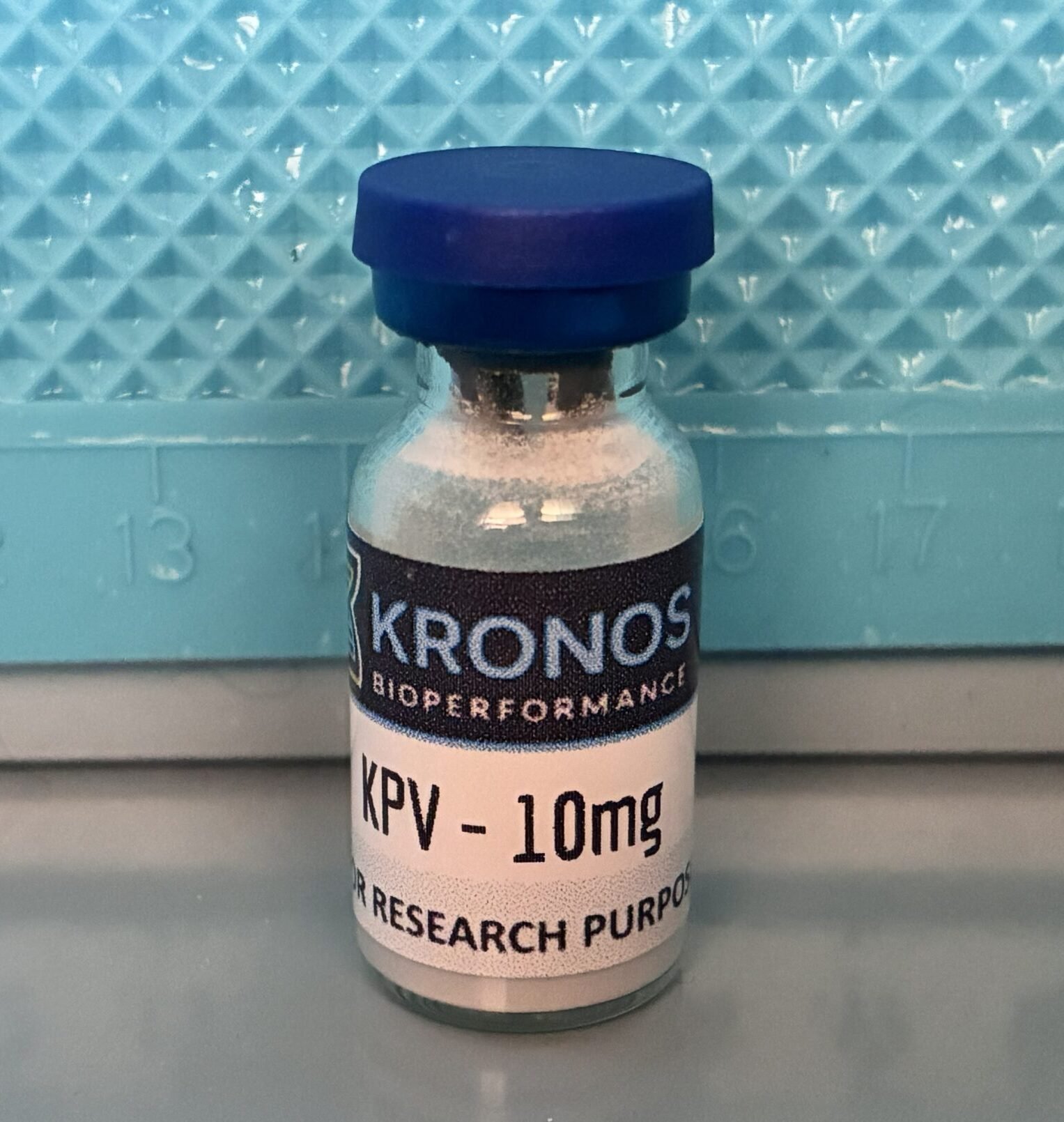
Description
What Is KPV?
KPV is a synthetic tripeptide composed of the amino acids Lys–Pro–Val (KPV). It is derived from the C-terminal sequence of α-melanocyte-stimulating hormone (α-MSH), a naturally occurring peptide involved in immune regulation, inflammation control, and tissue homeostasis.
Unlike the full α-MSH peptide, KPV retains potent anti-inflammatory signaling without activating melanocortin pathways associated with pigmentation or hormonal effects. This makes KPV a highly targeted immune-modulating and anti-inflammatory research peptide.
KPV has been studied extensively in gastrointestinal, dermatologic, and mucosal immune research, where localized inflammation and barrier integrity are central concerns.
What Does KPV Do?
KPV is best known for its ability to downregulate inflammatory signaling while preserving immune function. It has been studied for its potential to:
-
Reduce excessive inflammatory responses
-
Support gut and mucosal barrier integrity
-
Modulate immune activity without immunosuppression
-
Support tissue healing in inflamed environments
Rather than broadly suppressing immunity, KPV appears to restore immune balance in tissues prone to chronic inflammation.
How Does KPV Function in the Body?
KPV works through several targeted mechanisms:
1. NF-κB Pathway Inhibition
KPV inhibits activation of NF-κB, a key transcription factor involved in pro-inflammatory cytokine production. This results in reduced expression of:
-
TNF-α
-
IL-1β
-
IL-6
2. Cytokine Modulation
By downregulating pro-inflammatory cytokines, KPV helps shift immune signaling toward a regulated, non-destructive response.
3. Mucosal Barrier Support
KPV supports the integrity of epithelial barriers, particularly in the gastrointestinal tract, helping protect tissues from inflammatory damage and microbial translocation.
4. Non-Hormonal Melanocortin Signaling
While derived from α-MSH, KPV does not significantly activate melanocortin receptors involved in pigmentation, allowing targeted immune effects without systemic hormonal changes.
What Do Studies Show?
Preclinical and clinical research suggests that KPV:
-
Reduces inflammatory markers in gut and skin tissue models
-
Improves outcomes in experimental models of inflammatory bowel disease (IBD)
-
Demonstrates anti-inflammatory effects comparable to corticosteroids in some models, without steroid-associated side effects
-
Shows favorable tolerability in both systemic and localized administration models
Most studies focus on localized inflammation control and barrier protection, rather than systemic immune suppression.
Overall Benefits of KPV
-
Potent anti-inflammatory signaling
-
Supports gut and mucosal immune balance
-
Reduces inflammatory cytokine activity
-
Helps preserve tissue integrity during inflammation
-
Non-hormonal and non-immunosuppressive
KPV is often discussed as a targeted inflammation-control peptide, frequently evaluated alongside BPC-157, Thymosin Alpha-1, or gut-focused protocols.
Important Regulatory Note
KPV is not FDA-approved for medical use in the United States and is sold as a research peptide only. This information is provided for educational and informational purposes and is not intended to diagnose, treat, cure, or prevent any disease.
Summary of References
KPV in Gut Repair and Colitis Models
-
Ghosh, S.S., et al. (2007). Peptide KPV inhibits inflammation and apoptosis in murine colitis. Gastroenterology, 132(2), 502–515. https://www.sciencedirect.com/science/article/pii/S0016508507018525
-
Ashburn, J.H., et al. (2008). Inhibition of NF-κB by KPV reduces epithelial barrier dysfunction. Inflammatory Bowel Diseases, 14(3), 324–332. https://academic.oup.com/ibdjournal/article-abstract/14/3/324/4653598
-
Zhang, H., et al. (2024). KPV mitigates inflammation and restores intestinal integrity in IBD models. Journal of Hepatology, 2024(07), 075. https://link.springer.com/article/10.1007/JHEP07(2024)075
KPV in Skin and Wound Healing
-
Lee, Y.J., et al. (2015). KPV reduces cytokine activity and supports re-epithelialization in wounded skin. Journal of Investigative Dermatology, 135(10), 2503–2512. https://www.sciencedirect.com/science/article/pii/S0022202X15307697
-
Ward, D.B., et al. (2022). Healing effects of KPV-loaded hydrogels on burn wounds. Regenerative Therapy, 21, 124–133. https://www.sciencedirect.com/science/article/pii/S174270612200126X
KPV and Mucosal/Epithelial Integrity
-
Yin, Y., et al. (2022). Antimicrobial peptide hydrogels containing KPV enhance mucosal healing. Biomaterials Science, 10(2), 403–417. https://pubs.rsc.org/en/content/articlehtml/2022/bm/d1bm01466h
-
Zhao, L., et al. (2024). KPV promotes tight junction formation in epithelial models. Journal of Surgical Research, 295, 123–133. https://www.sciencedirect.com/science/article/pii/S0022356524308468
KPV in Immune Modulation
-
Zhao, H., et al. (2005). Regulatory effects of KPV on cytokine signaling and leukocyte migration. Journal of Immunological Methods, 306(1–2), 63–71. https://www.sciencedirect.com/science/article/pii/S0022480405004555
-
Liang, M., et al. (2024). Immunomodulatory role of KPV in inflamed tissue environments. Advanced Healthcare Materials, 13(3), 202402320. https://onlinelibrary.wiley.com/doi/abs/10.1002/adhm.202402320

Reviews
There are no reviews yet.