
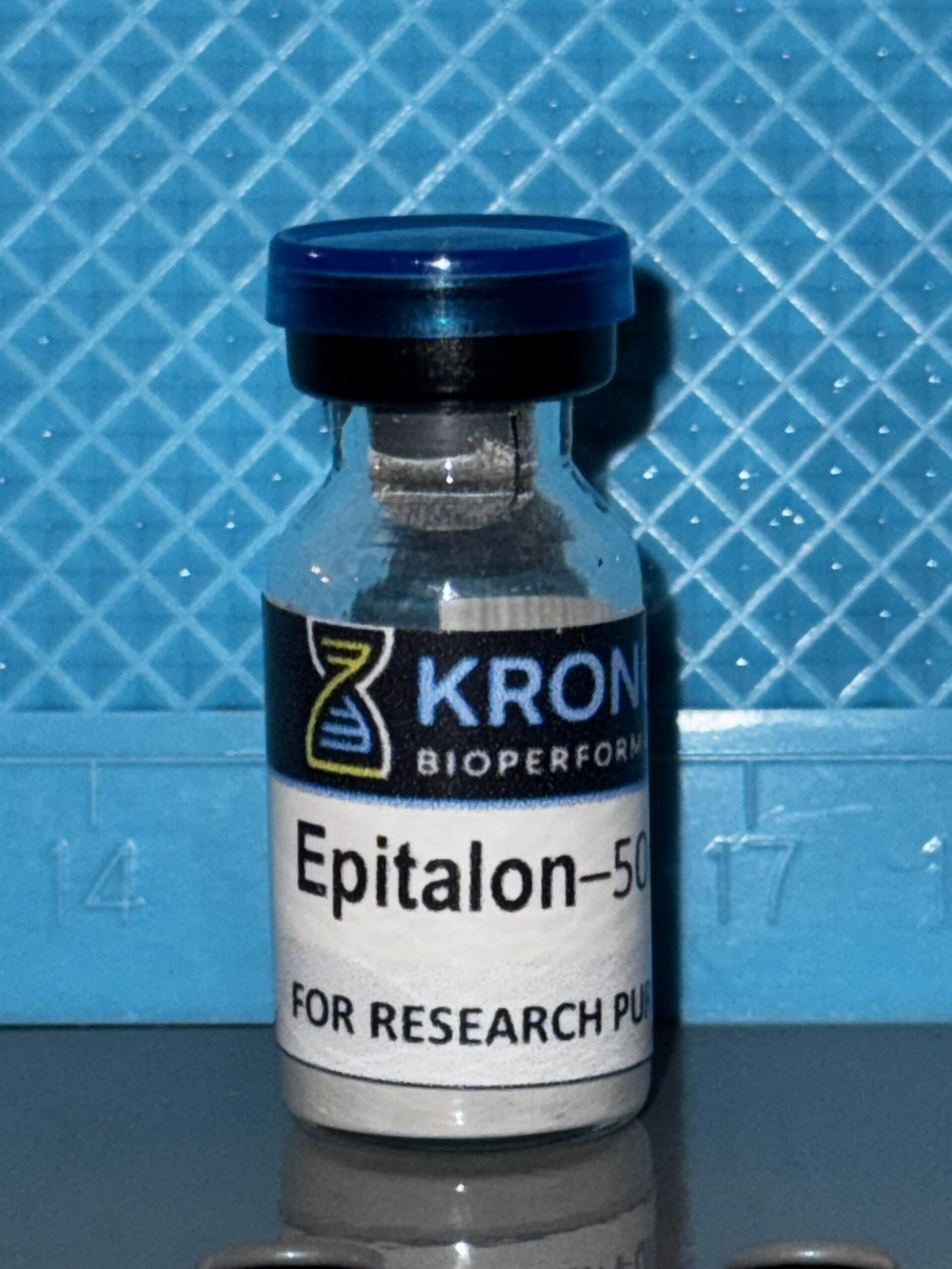
Description
What Is Epitalon? (Background)
Epitalon (also known as Epithalon or Epithalamin peptide fragment) is a synthetic tetrapeptide composed of the amino acids Ala–Glu–Asp–Gly. It was developed from research on Epithalamin, a naturally occurring peptide complex isolated from the pineal gland.
Epitalon was extensively studied by Russian scientist Vladimir Khavinson and colleagues as part of a broader effort to understand aging, cellular regeneration, and longevity regulation. Unlike traditional hormones, Epitalon acts as a gene-regulatory signaling peptide, influencing fundamental cellular processes tied to aging and circadian rhythm control.
What Does Epitalon Do?
Epitalon is best known for its potential role in longevity support, cellular aging regulation, and circadian rhythm normalization. It has been studied for its ability to:
-
Support healthy aging and lifespan extension
-
Improve sleep quality and circadian rhythm regulation
-
Enhance cellular repair and regeneration
-
Support immune and endocrine balance with age
Clinically, Epitalon has been explored in aging-related conditions, immune decline, and sleep–wake cycle disruption.
How Does Epitalon Function in the Body?
Epitalon functions through several foundational biological mechanisms:
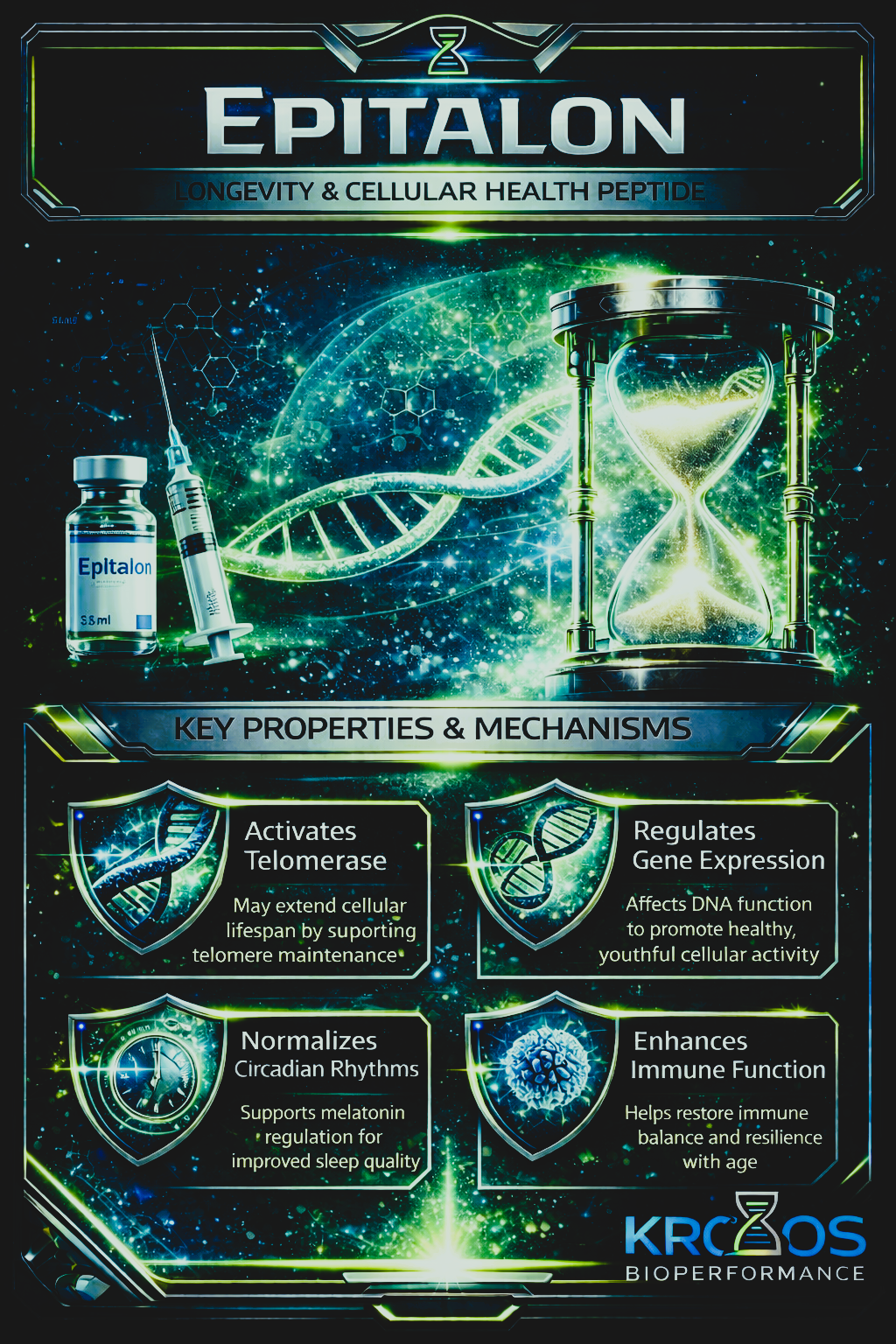
1. Telomerase Activation
One of Epitalon’s most notable effects is its ability to activate telomerase, the enzyme responsible for maintaining telomere length. Telomeres protect chromosomes during cell division, and their shortening is closely associated with cellular aging.
By supporting telomere stabilization, Epitalon may help:
-
Extend cellular lifespan
-
Improve genomic stability
-
Reduce age-related cellular decline
2. Epigenetic and Gene Expression Regulation
Epitalon influences gene expression by interacting with DNA regulatory regions, helping normalize cellular signaling pathways involved in aging, repair, and metabolic regulation.
3. Pineal Gland and Melatonin Regulation
Epitalon supports pineal gland function, helping normalize melatonin secretion. This plays a key role in:
-
Sleep–wake cycle regulation
-
Circadian rhythm stability
-
Neuroendocrine balance
4. Immune System Modulation
Research suggests Epitalon helps restore age-related declines in immune function by supporting immune cell signaling and differentiation.
What Do Studies Show?
Preclinical and clinical studies (primarily from Russian and Eastern European research institutions) suggest that Epitalon:
-
Activates telomerase in human somatic cells, leading to telomere lengthening
-
Improves markers of cellular longevity and genomic stability
-
Normalizes circadian rhythms and improves sleep quality in older subjects
-
Enhances immune parameters in aging populations
-
Demonstrates a favorable safety profile when studied in controlled settings
Animal studies have shown increased lifespan and delayed onset of age-related diseases, while human studies have focused on biomarkers of aging rather than direct lifespan outcomes.
Overall Benefits of Epitalon
-
Supports healthy aging at the cellular level
-
Promotes telomere maintenance and genomic stability
-
Improves sleep quality and circadian rhythm regulation
-
Supports immune and endocrine function with age
-
May enhance long-term cellular resilience and repair capacity
Epitalon is often positioned as a foundational longevity peptide, rather than a performance enhancer, and is frequently evaluated in periodic cycles rather than continuous use.
Important Regulatory Note
Epitalon is not FDA-approved for medical use in the United States and is sold as a research peptide only. This information is provided for educational and informational purposes and is not intended to diagnose, treat, cure, or prevent any disease.
References
-
Khavinson V et al. (2003). Epithalon Induces Telomerase Activity and Telomere Elongation in Human Somatic Cells. Bull Exp Biol Med.
https://link.springer.com/article/10.1023/A%3A1025493705728 -
Anisimov VN et al. (2001). Effect of Epithalon on Antioxidant Enzymes in Aging Rats. Biogerontology.
https://link.springer.com/article/10.1023/A%3A1025114230714 -
Khavinson V et al. (2002). Pineal Peptides and Melatonin Regulation. Neuroendocrinology Letters.
https://www.nel.edu/Neuro-endocrinology-letters-23-Suppl-3/ -
Anisimov VN et al. (2000). Epithalon Increases Lifespan in Rodent Models. Bull Exp Biol Med.
https://www.sciencedirect.com/science/article/abs/pii/S0047637400002177


Reviews
There are no reviews yet.