
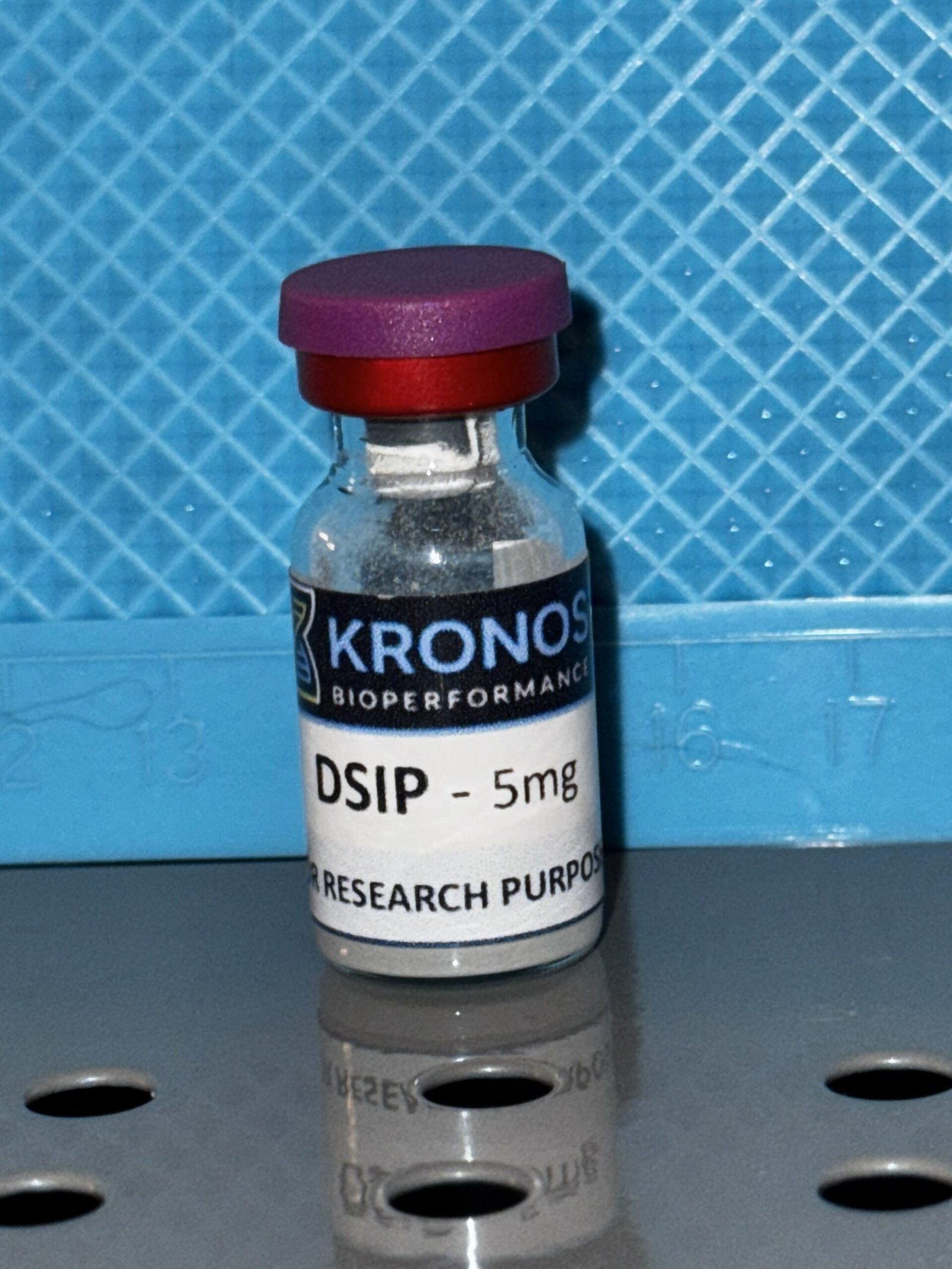
Description
What Is DSIP? (Background)
DSIP, or Delta Sleep–Inducing Peptide, is a naturally occurring neuropeptide first identified in the 1970s during research into sleep regulation. It is a nonapeptide (9 amino acids) that appears in both the central nervous system and peripheral tissues.
DSIP is unique in that it is endogenously produced and involved in sleep–wake regulation, stress adaptation, and neuroendocrine balance. Unlike sedative medications, DSIP does not directly depress the nervous system. Instead, it acts as a regulatory signaling peptide, helping normalize sleep architecture and physiological recovery processes.
What Does DSIP Do?
DSIP is best known for its potential role in sleep quality, recovery, and stress resilience. It has been studied for its ability to:
-
Promote deeper, more restorative sleep
-
Support delta-wave (slow-wave) sleep phases
-
Improve recovery from physical and mental stress
-
Support circadian rhythm stability
Rather than acting as a hypnotic, DSIP appears to support natural sleep physiology, especially under conditions of stress, sleep disruption, or overtraining.
How Does DSIP Function in the Body?
DSIP influences multiple interconnected systems:
1. Sleep Architecture Modulation
DSIP is associated with increased delta-wave activity, the deepest phase of non-REM sleep that is critical for:
-
Physical recovery
-
Memory consolidation
-
Hormonal regulation
2. Neurotransmitter Regulation
DSIP interacts with several neurotransmitter systems, including:
-
GABAergic pathways – promoting calm and relaxation
-
Serotonergic signaling – supporting sleep initiation and mood balance
3. Stress & HPA Axis Modulation
DSIP helps regulate the hypothalamic–pituitary–adrenal (HPA) axis, supporting balanced cortisol rhythms and improved stress recovery.
4. Neuroendocrine Support
DSIP has been shown to influence hormones associated with recovery and adaptation, including growth hormone, prolactin, and melatonin, particularly during sleep.
What Do Studies Show?
Preclinical and clinical research suggests that DSIP:
-
Improves sleep depth and quality, particularly under stress
-
Enhances delta-wave sleep in experimental models
-
Supports recovery in conditions involving sleep deprivation
-
May reduce stress-induced physiological strain
-
Demonstrates a favorable safety and tolerability profile
Research has also explored DSIP’s effects beyond sleep, including pain modulation, stress tolerance, and metabolic regulation, though results vary depending on context and dosing models.
Overall Benefits of DSIP
-
Supports deeper, more restorative sleep
-
Promotes physical and mental recovery
-
Enhances stress resilience and adaptation
-
Helps normalize circadian and cortisol rhythms
-
Non-sedating and non-habit forming
DSIP is often positioned as a recovery and sleep-regulation peptide, commonly evaluated alongside Epitalon, Selank, or growth-hormone–supportive protocols.
Important Regulatory Note
DSIP is not FDA-approved for medical use in the United States and is sold as a research peptide only. This information is provided for educational and informational purposes and is not intended to diagnose, treat, cure, or prevent any disease.

Reviews
There are no reviews yet.