
Introduction
The landscape of metabolic medicine is rapidly evolving, fueled by a new generation of peptide-based therapies. In this blog, we explore 3 powerful investigational and approved peptide therapies that are changing how clinicians treat obesity and metabolic disease,
What Are Peptides?
Peptides are short chains of amino acids — essentially miniature proteins — that act as signaling molecules in the body. Many hormones regulating metabolism, appetite, and glucose control are peptides, making them attractive frameworks for drug development in metabolic disorders.
1) Semaglutide — The GLP-1 Pioneer
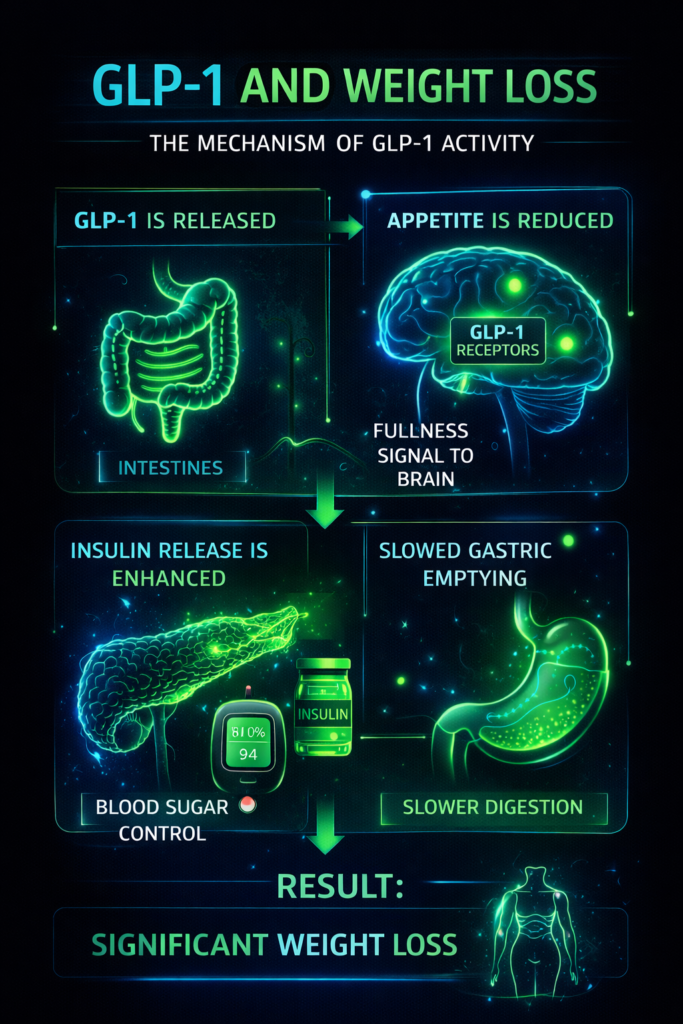
Semaglutide is a long-acting agonist of the glucagon-like peptide-1 (GLP-1) receptor.
- GLP-1 is a hormone secreted after eating that stimulates insulin release, slows gastric emptying, and promotes feelings of satiety.
- In the pivotal STEP-1 trial, weekly semaglutide 2.4 mg led to an average weight loss of ~14.9 % versus placebo over ~68 weeks in people with obesity without diabetes.
- In real-world analyses, patients on semaglutide lost an average of ~14.1 % body weight at one year.
Useful links:
🔗 GLP-1 receptor agonist overview — Wikipedia (mechanism & research)
2) Tirzepatide — Dual Hormone Action (GLP-1 + GIP)
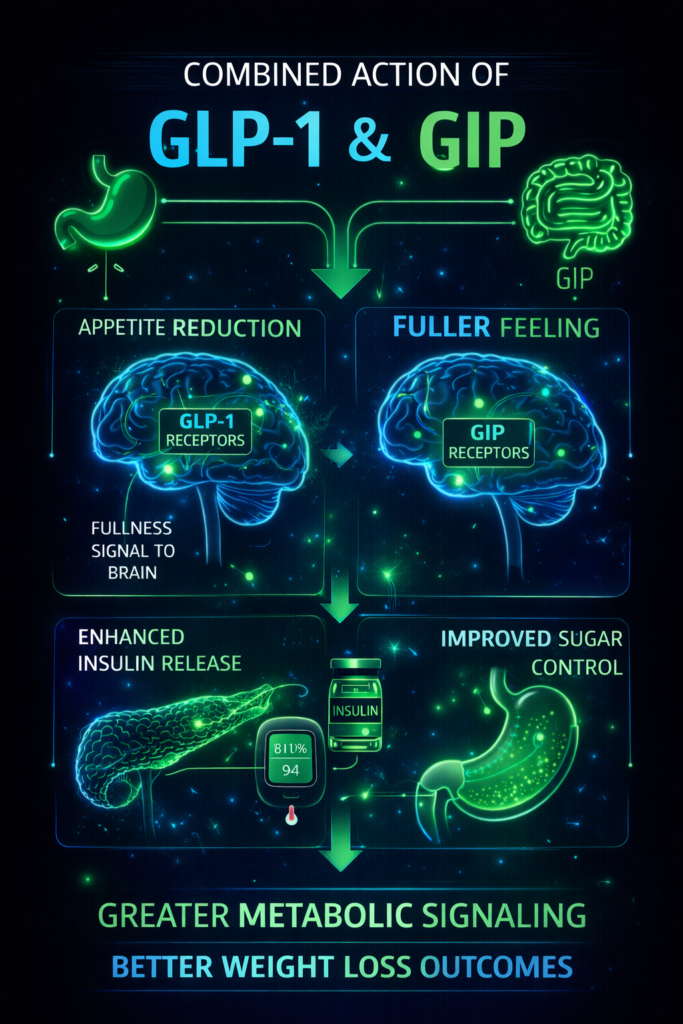
Tirzepatide is a dual agonist that targets both:
- GLP-1 receptors, and
- GIP (glucose-dependent insulinotropic polypeptide) receptors.
This dual action enhances insulin response and appetite regulation.
- In the SURMOUNT-1 trial, tirzepatide produced up to ~22.5 % weight reduction at 72 weeks.
- In head-to-head trials, tirzepatide consistently outperformed semaglutide for weight loss (e.g., ~20.2 % vs ~13.7 %).
- Real-world data also show tirzepatide leads to greater weight and HbA1c reduction compared with semaglutide.
Useful link:
🔗 Tirzepatide for obesity (NEJM trial) — Semaglutide vs Tirzepatide comparison
3) Retatrutide — The Triple Agonist
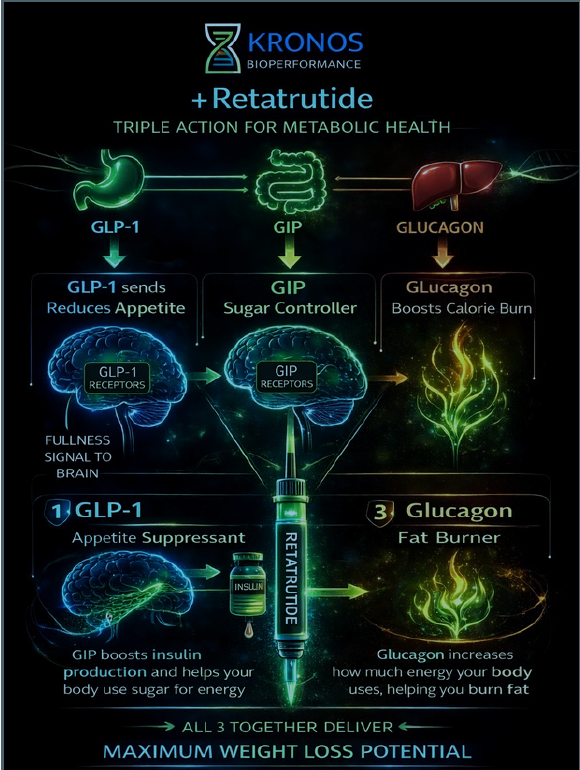
Retatrutide represents the newest innovation: a triple hormone receptor agonist targeting:
- GLP-1 receptors
- GIP receptors
- Glucagon receptors (which may boost energy expenditure and fat metabolism)
Key research points:
- A 48-week Phase 2 obesity study showed weight reductions of 22.8 % and 24.2 % at different doses.
- In proof-of-concept trials, retatrutide significantly improves both weight and glycemic control in people with T2D.
- Large Phase III data indicates up to ~28.7 % average weight loss in select subgroups.
- It remains investigational and is not yet FDA-approved.
Useful link:
🔗 Triple-hormone receptor agonist retatrutide study — NEJM Phase 2 data
📊 Quick Comparison: Mechanism & Efficacy
| Effect / Feature | Semaglutide | Tirzepatide | Retatrutide |
|---|---|---|---|
| Targets | GLP-1 | GLP-1 + GIP | GLP-1 + GIP + Glucagon |
| Avg Weight Loss (Trial) | ~14-15 % | ~20-22.5 % | ~22-28 % |
| FDA Status | Approved | Approved | Investigational |
| Administration | Weekly injection | Weekly injection | Weekly injection |
(Data are summaries of published clinical trials and real-world studies)
Conclusion
The peptide revolution in metabolic health is not just hype — it’s rooted in mechanistic biology and strong clinical data:
- Semaglutide set the stage with GLP-1 agonism.
- Tirzepatide boosted outcomes by adding GIP.
- Retatrutide may push boundaries further with triple receptor targeting.
As research evolves and more data emerge, these therapies may expand the tools clinicians use to fight obesity and metabolic disease.
If you are interested in evaluating Retatrutide, there are 3 volumes available:
10mg: Retatrutide (10mg) – Kronos BioPerformance